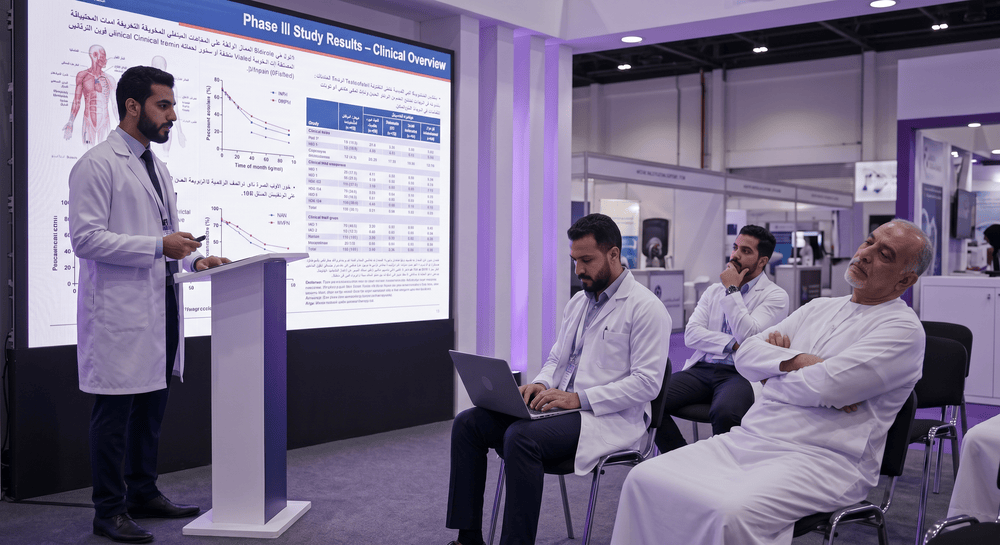

Pharmaceutical communication is often built around strong scientific content: clinical data, mechanism of action, treatment pathways, guidelines, safety information, and patient profiles. But even strong science can lose impact when it is delivered only through slides, graphs, and passive presentations.
The challenge is not always the quality of the data. The challenge is how the data is experienced.
Physicians are busy. They attend congresses, advisory boards, internal training sessions, and product discussions where many messages compete for attention. A slide may explain a treatment pathway, but it rarely allows the physician to experience the decision context behind it.
Clinical experience changes that.
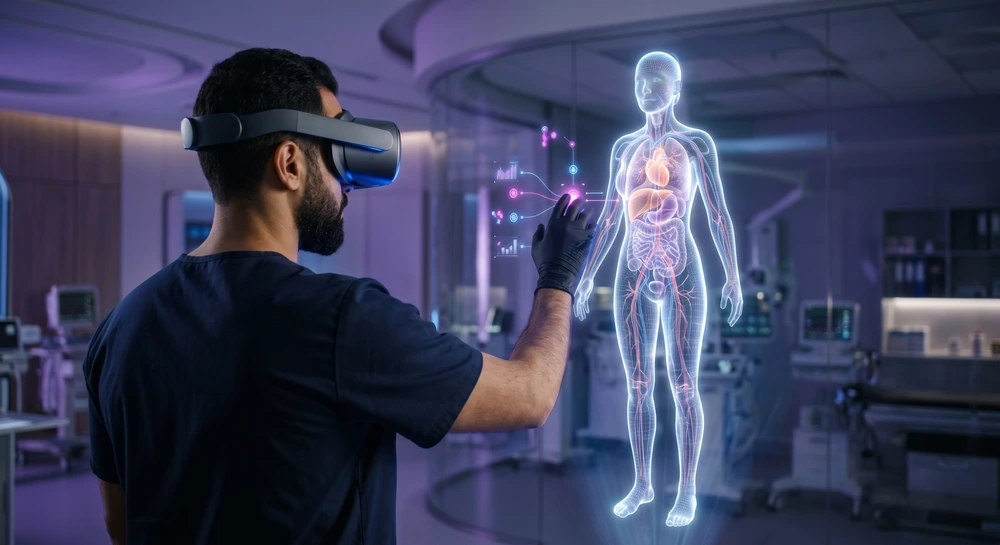
Instead of only presenting disease progression, a physician can interact with a patient case. Instead of only explaining mechanism of action, the experience can show treatment impact inside a clinical journey. Instead of only discussing patient objections, physicians can practice communication and observe the consequences of their approach.
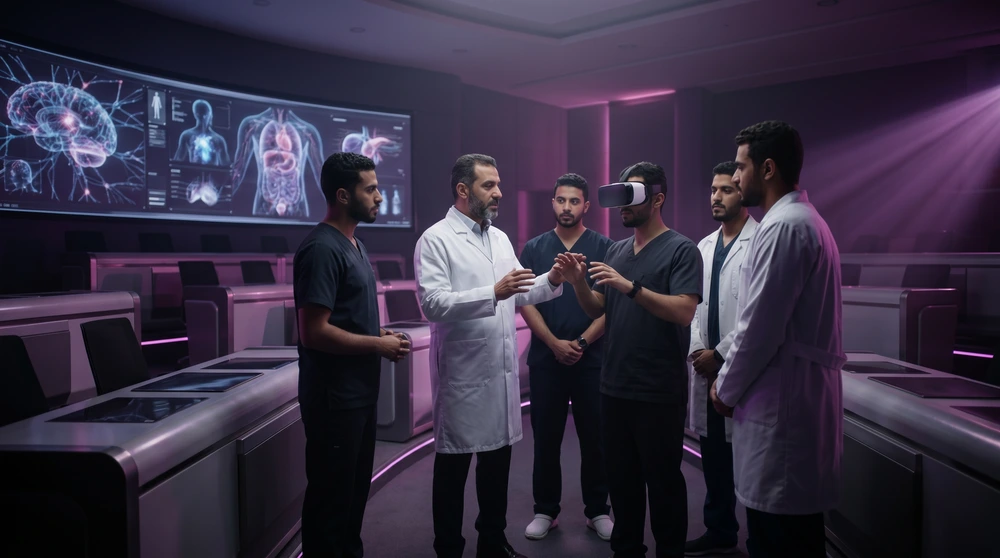
This is particularly valuable for medical affairs, scientific engagement, product launch activities, advisory boards, and congress booth experiences. The discussion becomes case-based, decision-driven, and more memorable.
The strongest pharma engagement does not feel promotional. It feels educational, clinically grounded, and relevant to real practice. It helps physicians understand where a therapy fits, how treatment decisions unfold, and what impact may look like in a patient journey.
FluxTech360 helps pharmaceutical teams transform scientific objectives into interactive medical experiences. This may include disease progression, mechanism-of-action visualization, therapeutic impact, patient communication, objection handling, and treatment pathway comparison.
The result is not only better engagement. It is clearer clinical understanding.
Want to turn your scientific content into an interactive medical experience?