
OSCE exams are widely used because they help assess practical clinical skills, communication, reasoning, and examination technique. However, traditional OSCE delivery comes with major operational and educational limitations.
One of the biggest issues is variability. Actors may not reproduce symptoms consistently. Different examiners may interpret performance differently. Some clinical signs are difficult or impossible to simulate accurately. The result is that students may not always be assessed under truly equal conditions.
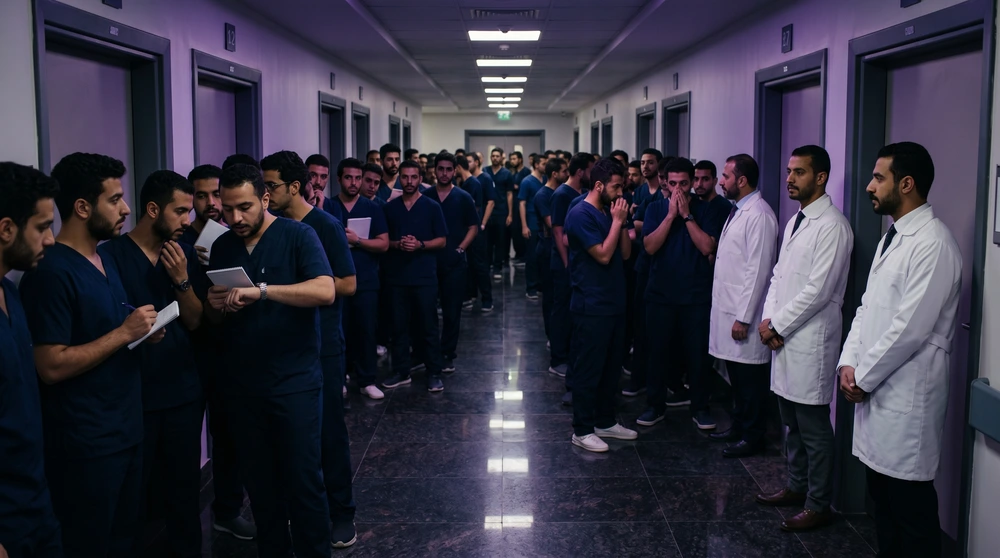
Another major challenge is logistics. OSCE exams require rooms, actors, examiners, schedules, preparation, and repeated coordination. For large student cohorts, this can become expensive, time-consuming, and difficult to scale.
There is also the challenge of case limitation. Some cases are hard to reproduce. Rare conditions, emergency scenarios, physical signs, female patient simulations, or complex clinical pathways may not be available when needed. This limits what students can experience and what institutions can assess.
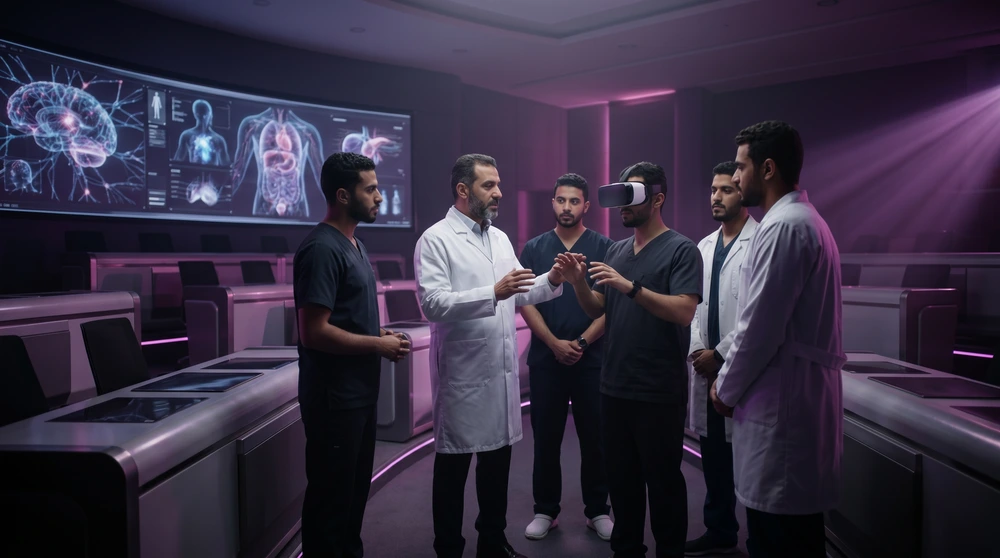
Simulation-based OSCE offers a different model. Instead of depending fully on actors and physical setups, institutions can design controlled patient scenarios with consistent symptoms, vital signs, findings, and decision pathways. Each student can interact with a structured patient case, while educators maintain control over the assessment conditions.
This does not remove the need for clinical educators. It gives them more control. It allows them to standardize cases, adjust difficulty, repeat scenarios, and generate feedback linked to performance.
The strongest OSCE model is not only digital or immersive. It is measurable. It allows institutions to understand how students think, decide, communicate, and respond to clinical information.
FluxTech360 supports assessment by enabling controlled clinical simulation, customized scenarios, objective feedback, and scalable student evaluation. The aim is to make OSCE more consistent, more realistic, and easier to expand across cohorts.
Want to explore a more scalable OSCE model?